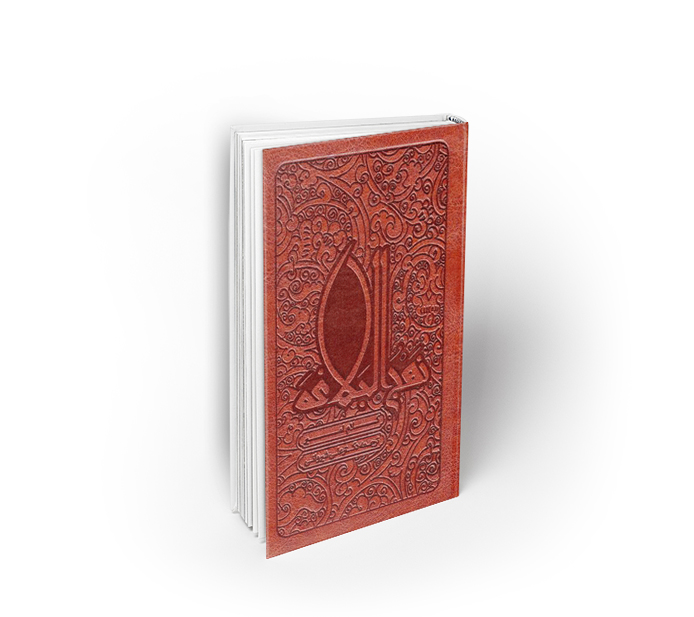
After memorizing the Holy Qur’an, a selection of Prophetic traditions, and the Sermon of Lady Fatimah al-Zahra (peace be upon her), Dr. Ali Rezazadeh Jouybari decided to memorize Nahj al-Balagha, the renowned collection of sermons, letters, and sayings of Imam Ali ibn Abi Talib (peace be upon him).
Memorizing Nahj al-Balagha was not particularly difficult for him. Having already committed the Qur’an to memory, he had become familiar with the Arabic language through continuous engagement with the Qur’anic text and careful study of its Persian translation.
His study of the four-volume series “Key to Understanding the Language of the Qur’an” further strengthened his understanding of Arabic vocabulary.
Filled with deep love for the Commander of the Faithful, Imam Ali (peace be upon him), Ali devoted himself day and night to memorizing the sermons, letters, and wisdom of Nahj al-Balagha, finding immense spiritual joy along this sacred path.
Before reaching the age of nine, he had memorized the entire Nahj al-Balagha. His mastery was so remarkable that whenever prominent scholars or officials asked him for the number of a particular saying, he would immediately recite it from memory with eloquence and precision, astonishing everyone present.
Why Did Ali Memorize Nahj al-Balagha?
During a live television program titled Besharat, when Ali was only eight and a half years old, the presenter asked him what had inspired him to memorize Nahj al-Balagha.
Ali replied by quoting the words of Imam Khomeini (may Allah have mercy on him):
“After the Holy Qur’an, Nahj al-Balagha is the greatest guide for both the spiritual and material life of humanity. It is the finest book for the liberation of mankind, and its ethical, spiritual, and administrative teachings provide one of the greatest paths to human salvation.”
Inspired by these teachings, Ali later appeared in numerous television programs discussing the themes and lessons of Nahj al-Balagha. His engaging explanations attracted audiences of all ages, especially children and families.
He narrated stories from Nahj al-Balagha and explained their lessons in a simple, clear, and accessible manner, encouraging viewers to appreciate the timeless wisdom of Imam Ali (peace be upon him).
After Memorizing Nahj al-Balagha
Following his memorization of Nahj al-Balagha, Ali continued his academic and intellectual journey.
He frequently interpreted Qur’anic verses through the explanations and teachings of Imam Ali (peace be upon him), demonstrating the profound relationship between the Qur’an and Nahj al-Balagha.
His knowledge gradually expanded beyond memorization to include:
- Qur’anic interpretation (Tafsir)
- Prophetic traditions (Hadith)
- The concepts and teachings of Nahj al-Balagha
- Comparative studies between Qur’anic verses and narrations
- Extensive reading and scholarly research
These efforts eventually led him to pursue advanced academic studies and earn a doctorate.
At an early age, he also received an Honorary Doctorate for Creativity in Syria (2001) after successfully completing an intensive academic examination conducted by distinguished Syrian scholars over four sessions totaling nearly ten hours.
He also answered comprehensive scholarly questions before students at the University of Damascus, earning widespread admiration.
The examination covered:
- Memorization of the Holy Qur’an
- Qur’anic and Hadith studies
- The concepts of the Qur’an and Nahj al-Balagha
- Comparative analysis between Qur’anic verses and narrations
- Memorization of Nahj al-Balagha
At that time, he was regarded as the youngest individual in the Islamic world to have memorized both the Holy Qur’an and Nahj al-Balagha, while also demonstrating exceptional analytical and scholarly abilities.
This distinguished achievement received wide recognition throughout Syria’s religious and academic circles and was considered a source of pride for the Islamic Republic of Iran and for those inspired by the teachings of Imam Khomeini.
A Saying of Imam Ali (Peace Be Upon Him) About the Qur’an
Imam Ali (peace be upon him) said:
“Allah sent the Prophet after a long interval without messengers, during a period of neglect among nations and the collapse of previous covenants. He came confirming what was before him and bringing the guiding Light—the Qur’an. Ask the Qur’an to speak, though it will not speak itself. Yet I will inform you about it: within it is the knowledge of what is to come, the account of what has passed, the remedy for your ailments, and the proper order of your affairs.”
Source: Nahj al-Balagha, Sermon 158.
Keywords: Nahj al-Balagha, Brother of the Qur’an, Imam Ali (PBUH), Dr. Ali Rezazadeh Jouybari, Qur’an Memorization, Islamic Education, Qur’anic Studies, Hadith, Honorary Doctorate, University of Damascus
Breadcrumb: Home – Quran & Nahj al-Balagha Institute → Nahj al-Balagha: The Brother of the Qur’an